
Mathematics
Discover how our Mathematics programmes build confident problem-solvers through games, real-world tasks, and tailored support for every child.
Our Goals
To foster students’ interest in Mathematics and develop them to be Confident and Eager Problem-Solvers.
The Primary Mathematics Syllabus aims to enable all students to:
acquire mathematical concepts and skills for everyday use and continuous learning in mathematics,
develop thinking, reasoning, communication, application, and metacognitive skills through a mathematical approach to problem-solving and
build confidence and foster interest in mathematics.
(Source: Ministry of Education, Mathematics Syllabus Primary, 2013)
Our Approach
The school is committed to grow our students as problem-solvers by providing opportunities for them to develop their curiosity and interest in Mathematics through games and authentic learning experiences. They are also taught problem solving skills using the STAR approach, adapted from Polya’s problem solving techniques.
Study the problem carefully
Think of a plan/strategy
Act it out
Reflect on your answer
Key Programmes
Authentic Learning Experiences
Students learn better through exploration and discovery. Through Learning Experiences, students deploy mathematical processes and skills to solve real-world problems. This is key to learning Mathematics for use in everyday life, and makes the learning of Mathematics more meaningful.
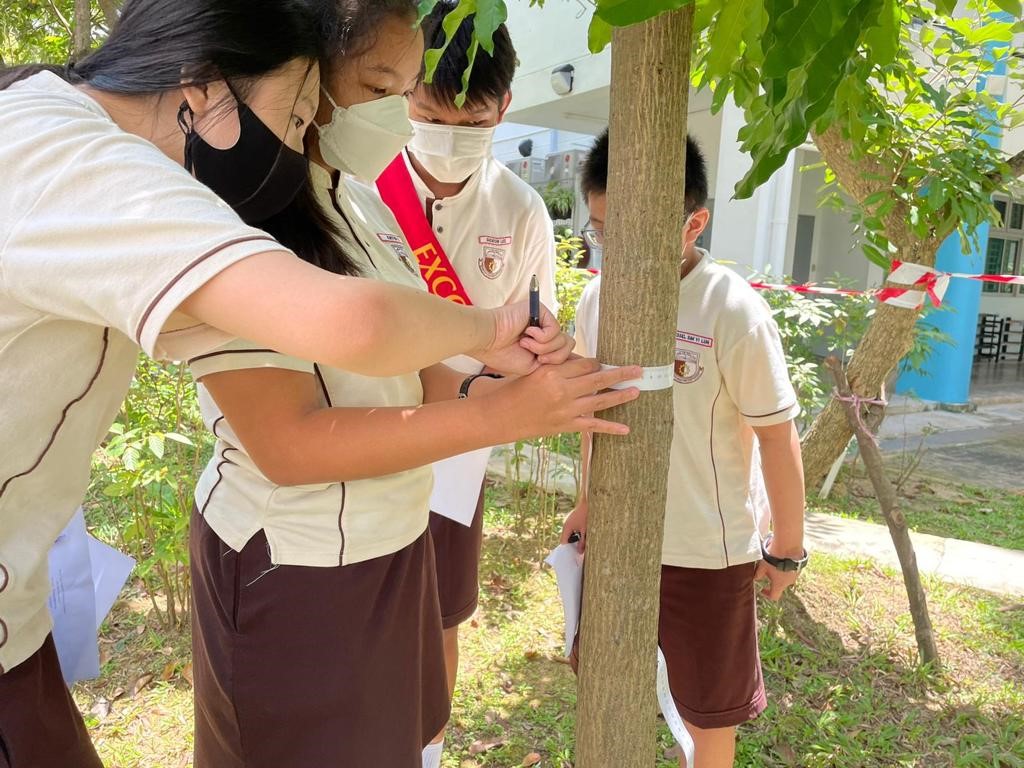
Students engaged in measuring the circumference of the tree trunk to estimate the age of the tree.MATHEMATICS GAMES @ RECESS PLAY
During recess, students play with interesting Mathematics Games and Puzzles. This provides opportunities for students to develop critical thinking and problem-solving skills while having fun.
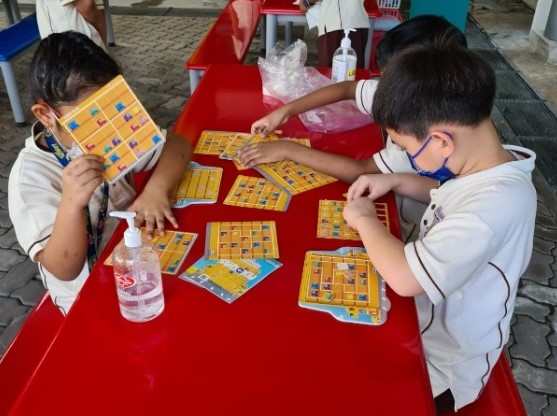
Mathematics Games @ Recess Play
Self-Directed Blended Learning
With technology, students are able to learn mathematical concepts at their own pace independently. Through these lessons, students can deepen their conceptual understanding and teachers are able to assess students’ learning formatively.
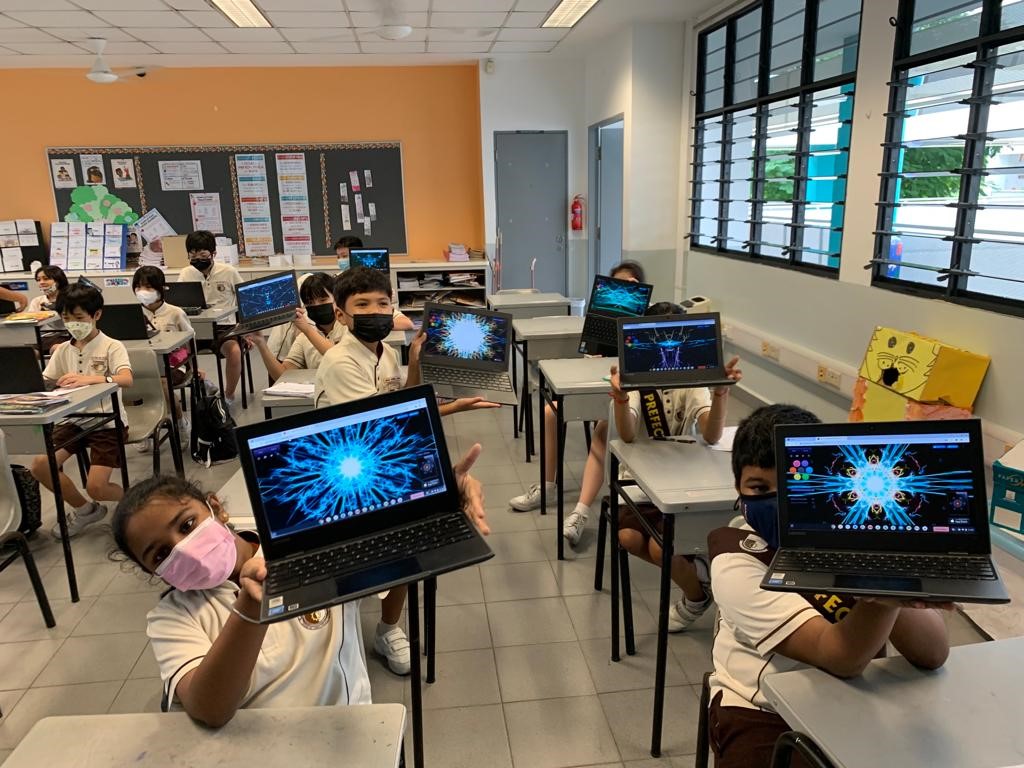
Students engaged in self-directed learning with technology
Fun with Mathematics (P3 to P6)
Each term, activities involving games and puzzles that train students in their problem solving capabilities are infused into the curriculum to actively engage students in their learning. This programme aims to develop students in their critical thinking skills and thinking habits such as ‘Thinking Flexibly’ and ‘Thinking about Thinking’.
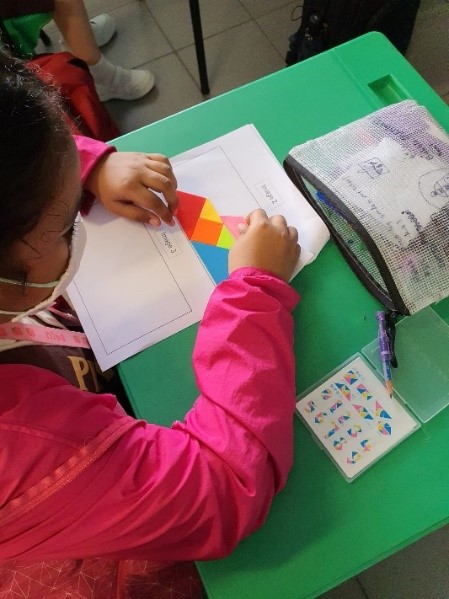
Students engaged in solving puzzles during the Fun with Mathematics programme.
Differentiated Support For Every Child
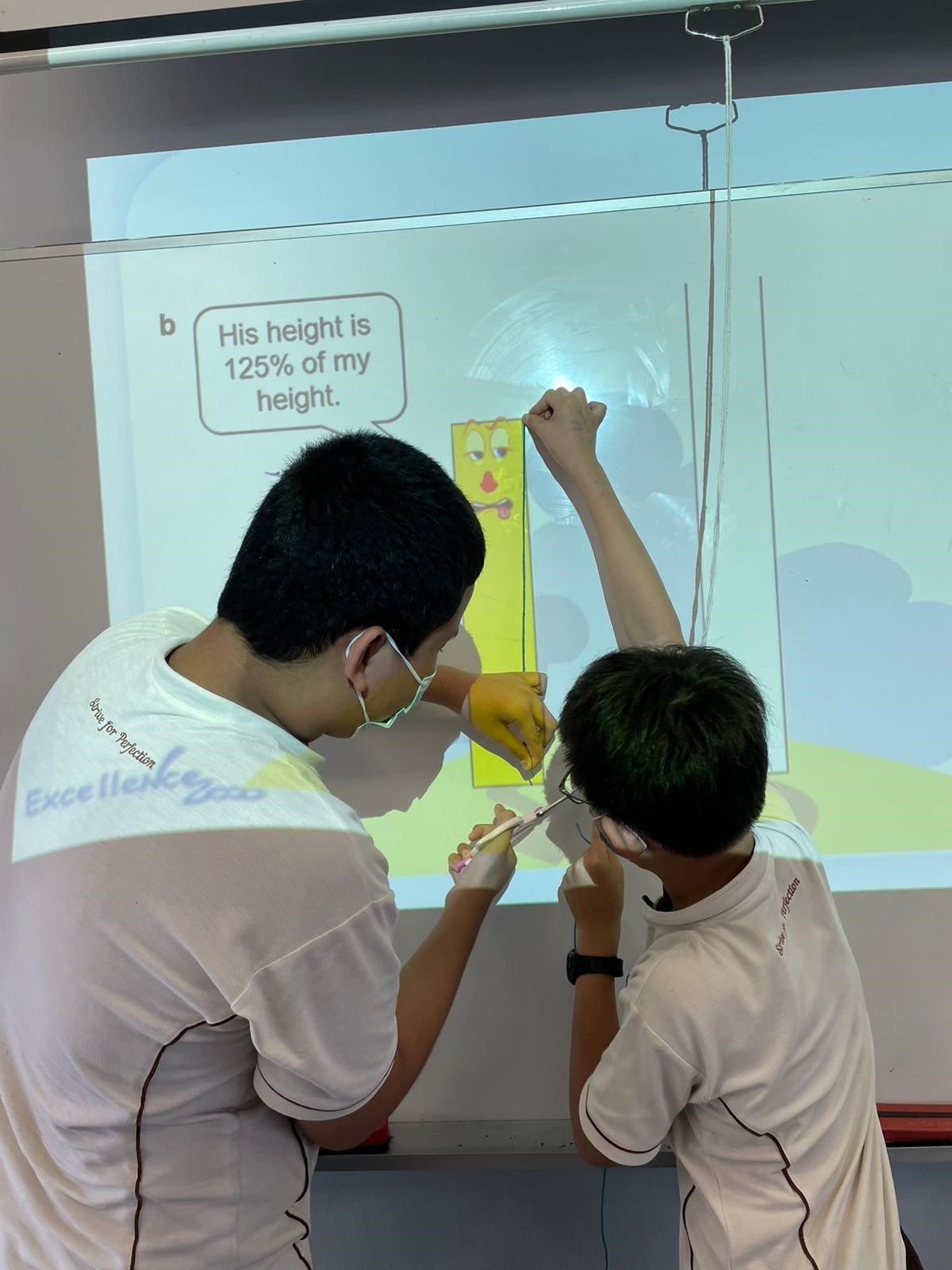
EXCELLENCE 2000 MATHEMATICS (E2K MATHEMATICS)
To further develop the potential of students in Mathematics, selected P4 and P5 students who demonstrate high interest and ability in Mathematics are selected to join in the E2K Mathematics programme. The programme aims to develop students' mathematical reasoning skills and deepens their conceptual understanding through an inquiry approach. Students will have opportunities to work independently or collaborate with their peers and engage in mathematical thinking through resources such as puzzles, games and mathematical explorations specially designed for this programme.
MATHEMATICS OLYMPIADS
To help students who are talented in Mathematics achieve Excellence, the school provides opportunities for these students to attend enrichment classes and participate in selected competitions.LEARNING SUPPORT PROGRAMME (MATHEMATICS)
The school supports students who require additional help in the learning of mathematics through the Learning Support Programme. These students learn in an environment that is designed to help them bridge their learning gaps.MATHEMATICS REMEDIAL PROGRAMMES
To provide support for our learners, selected students are invited to join in the remedial programmes. Time and space are provided to help students bridge their learning gaps.